Looking back at 2003 in 2025 and The Seeking Peace Paintings.
It was 2003. I had forgotten that I had brought home large rolls of unsized hemp paper from assisting Makoto Fujimura in teaching Nihonga at The Glen Workshop at Saint John’s College in Santa Fe, NM. I was frustrated with how long it would take to be able to build the kind of depth I was seeking in large work only 2 years after discovering Nihonga in Kyoto - yearning for it to become as easy looking as the remarkable work I was seeing in museums and in Mako’s studio that he shared with Hiroshi Senju.
I was forgetting the fact that - I was not Japanese. It is a difficult medium. It takes a lifetime.
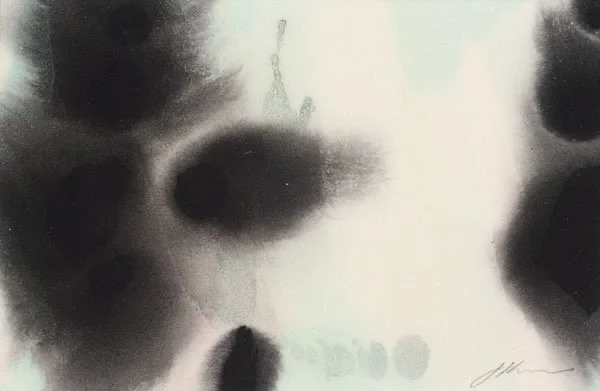
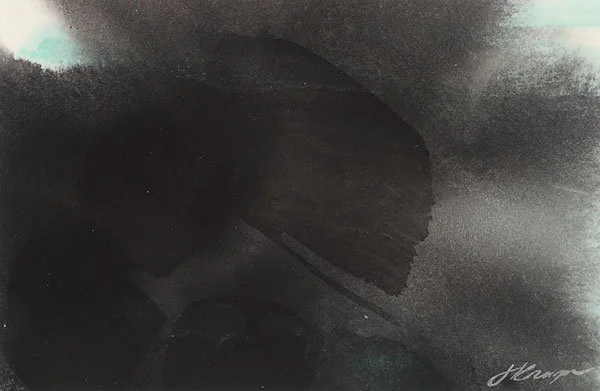
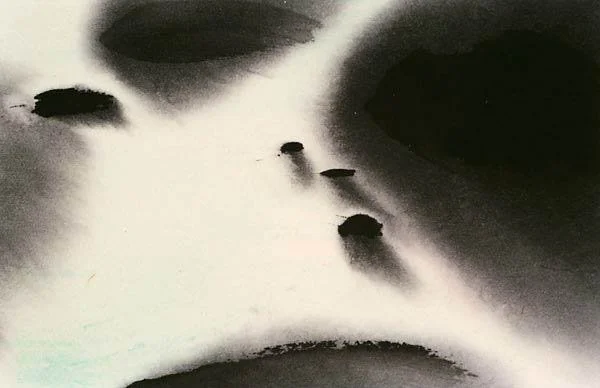
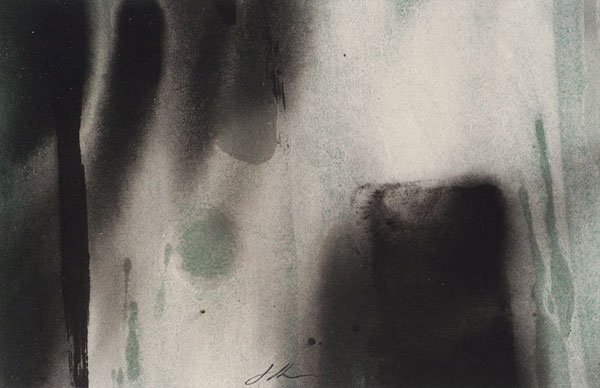
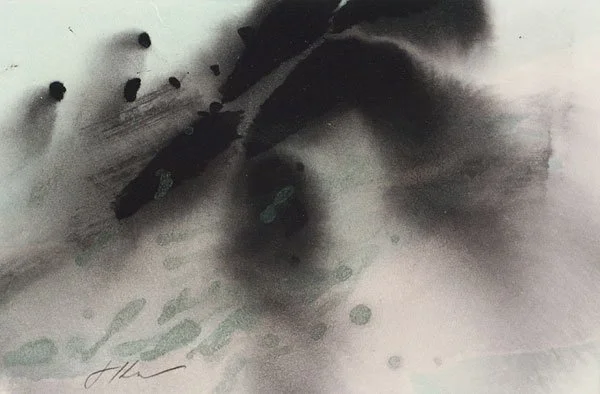
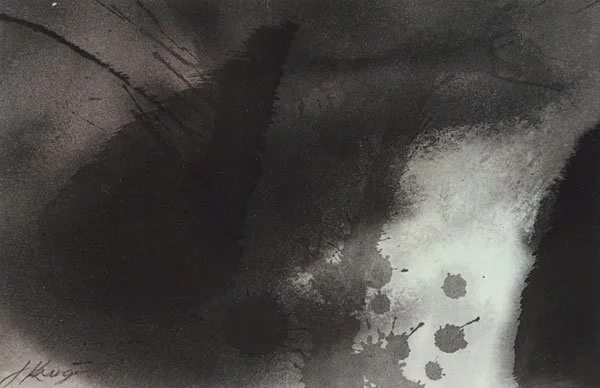
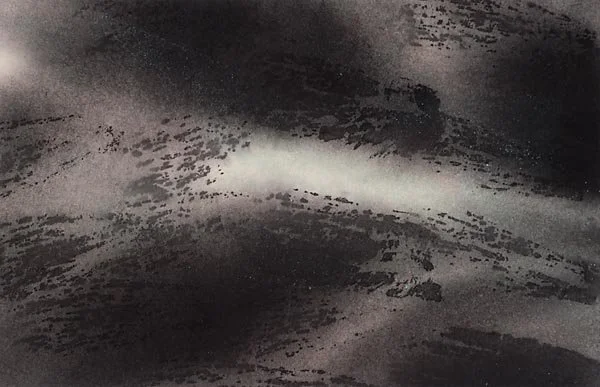
An artist friend suggested that I create small studies each morning to free up my mind and hand. I inadvertently chose this workshop paper and some magic appeared. Witnessing scant amounts of the ink and mineral pigment bleed with such depth was an unexpected surprise. This ritual became a daily practice and a series of over 600 small 4”x 6” paintings created between 2003 - 2006 evolved. Several years later I learned that my discovery had a name: suiboku-ga, “water-ink”- Japanese monochrome ink painting. Suiboku-ga developed in China during the Sung Dynasty (960-1274) and was introduced to Japan by Zen Buddhist monks in the mid 14th century. It reached its height in the Muromachi period (1338-1573) with such masters as Sesshū Tōyō and Sesson Shūkei. Bold black ink strokes and washes allowed suiboku-ga artists to eliminate from their paintings all but the essential character of the subject.
Mine became elusive shadows, but even more revealing was the significant peace that came from the process itself. I had just attended a Mihaly Csikszentmihalyi Flow Theory lecture at The University of Chicago. This was it- the optimal experience that overrode any other thoughts!
Here is a sampling. They have been exhibited throughout the USA and Japan. Click on image to see full scale.